How Thermal Drones Detect Problems Invisible to Humans
Drones are no longer used only for photography and videography. When equipped with thermal cameras, they can detect temperature differences that are invisible to the human eye. This makes thermal drones valuable for inspections, maintenance, agriculture, emergency response, and industrial applications.
By combining aerial mobility with infrared imaging, these drones allow professionals to identify potential problems quickly, even in areas that are difficult or dangerous to access manually.
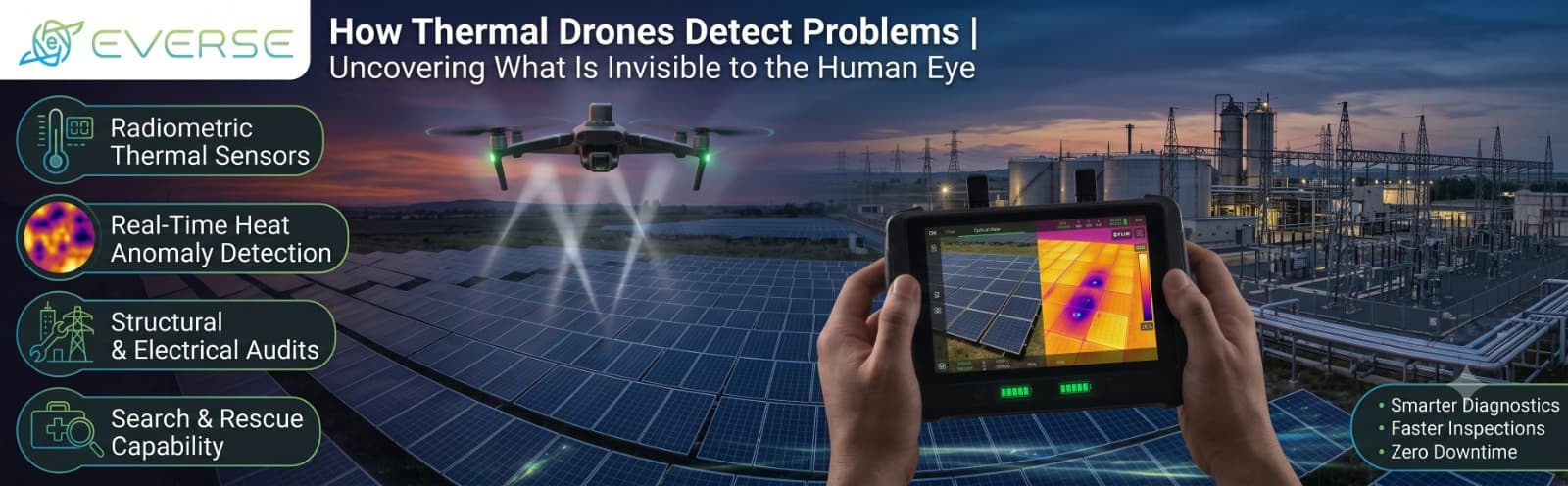
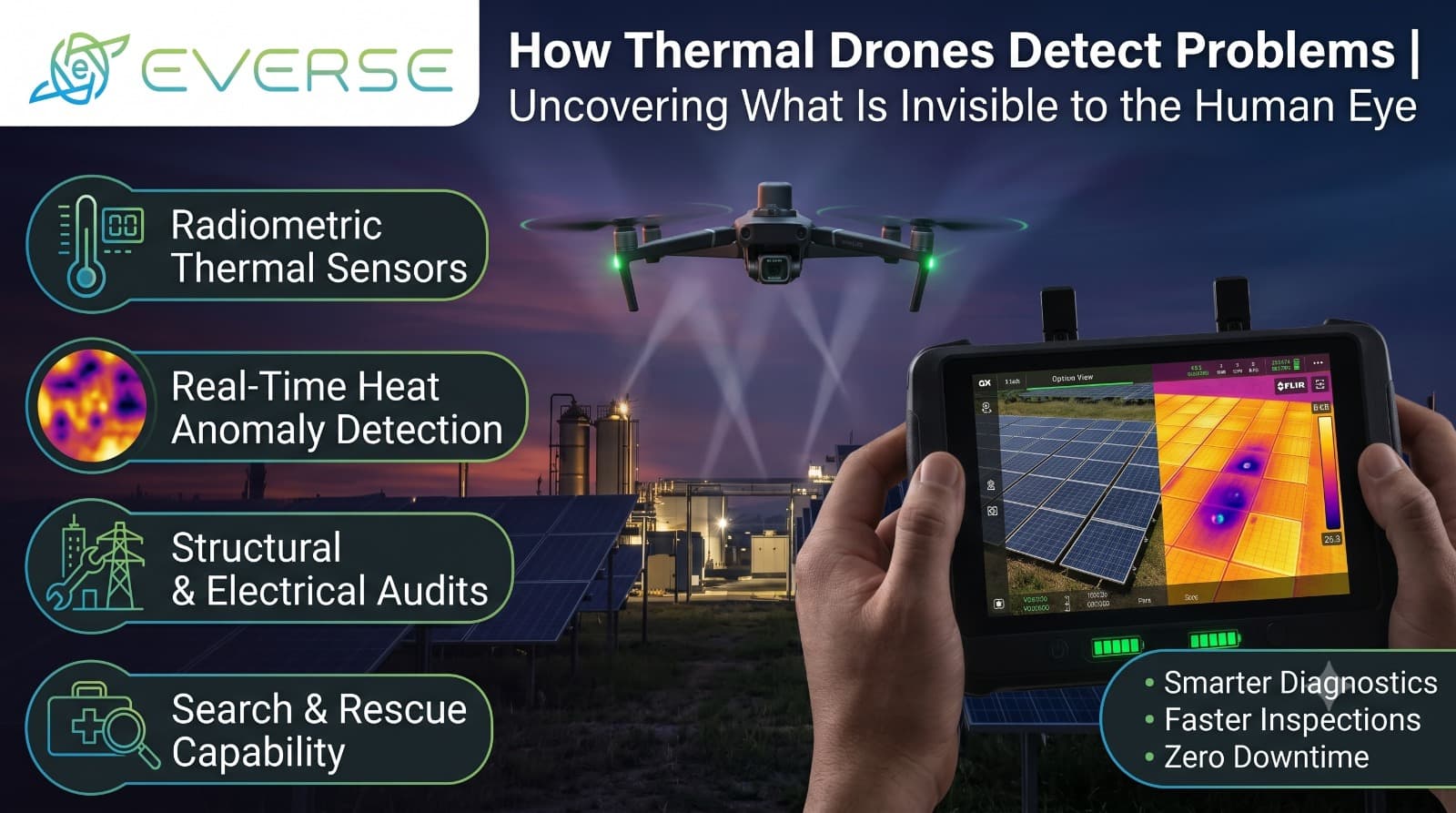
A thermal drone is a drone equipped with a thermal imaging camera. Unlike a standard camera that captures visible light, a thermal camera detects infrared radiation and displays temperature differences as a visual image.
For example, an overheating electrical component may appear significantly warmer than the surrounding equipment. Similarly, a solar panel with a potential fault may show an unusual heat pattern compared with neighbouring panels.
Thermal imaging does not literally allow a drone to see through objects. Instead, it detects differences in surface temperature and helps operators identify unusual patterns that require further investigation.
Thermal drones have applications across several industries.
Power infrastructure can be difficult and dangerous to inspect manually. Thermal drones can help identify unusual heat patterns in transformers, electrical connections, transmission equipment, and other components.
Detecting these anomalies early can help maintenance teams investigate potential faults before they lead to equipment failure.
Large solar farms contain thousands of panels, making manual inspection time-consuming. Thermal drones can scan large areas efficiently and identify hotspots or unusual temperature patterns that may indicate potential issues.
This allows operators to focus their attention on panels that require closer inspection.
Thermal imagery can help identify unusual temperature variations across roofs and building surfaces. These patterns may help inspectors investigate potential insulation problems, moisture-related issues, or areas of heat loss.
However, thermal results should always be interpreted alongside other inspection methods because weather, sunlight, wind, and moisture can affect readings.
Thermal cameras can also support search and rescue operations. In suitable conditions, they can help identify heat signatures from people in forests, fields, or disaster-affected areas, particularly when visibility is limited.
This allows rescue teams to search large areas from the air while reducing the need for extensive manual searches.
Factories and industrial facilities contain machinery and equipment that can generate significant heat. Thermal drones can provide aerial views of equipment, pipelines, storage areas, and other infrastructure.
They can help identify unusual temperature patterns without requiring workers to physically access every location.
Traditional thermal cameras usually require an operator to reach the inspection area. A drone provides a different advantage: mobility.
Thermal drones can:
- Cover large areas quickly
- Access difficult locations
- Reduce manual inspection requirements
- Capture thermal and visual imagery
- Identify potential anomalies from the air
- Support safer preliminary inspections
For large infrastructure and outdoor environments, this can make inspection workflows considerably more efficient.
The right thermal drone depends on the application. Important features can include:
- Thermal camera resolution
- Temperature measurement capabilities
- High-quality visual camera
- Long flight time
- Obstacle sensing
- Reliable transmission
- Accurate positioning
- Inspection and mapping software
Professional inspection teams may require enterprise drones with advanced thermal sensors and specialised software rather than consumer camera drones.
A thermal anomaly does not automatically mean that equipment is damaged. Environmental conditions, sunlight, wind, moisture, reflections, and equipment load can all influence thermal readings.
Thermal drones are therefore best used as inspection and screening tools. When an unusual pattern is detected, qualified professionals should investigate the cause using appropriate diagnostic methods.
As thermal sensors, artificial intelligence, and drone software continue to improve, aerial thermal inspections are becoming increasingly capable. AI-assisted analysis may help operators identify unusual patterns faster, while automated flight planning can make large-scale inspections more efficient.
The real value of thermal drones isn't simply seeing heat. It's turning invisible temperature differences into useful information that professionals can investigate and act upon.
At Everse, we provide advanced drone solutions for professional applications including inspection, surveying, industrial operations, and emergency response. For organisations looking to improve inspection efficiency and access difficult areas, thermal drone technology can provide valuable aerial insights while reducing the need for time-consuming manual inspections.