How to Fly DJI Drones Safely in Crowded Places
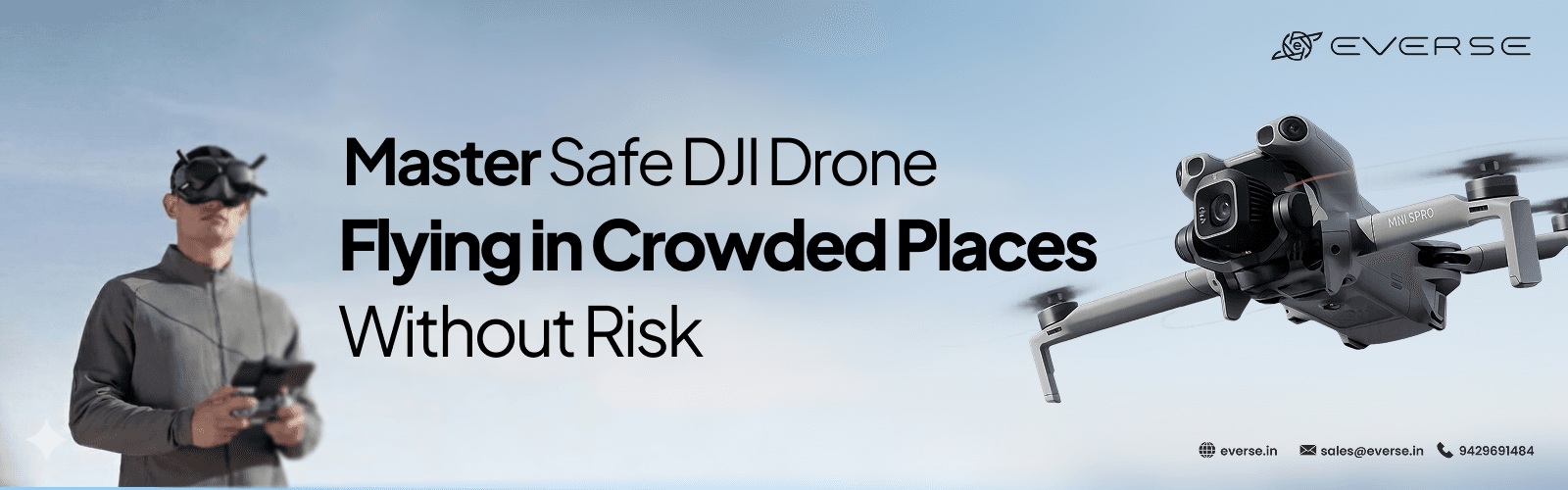
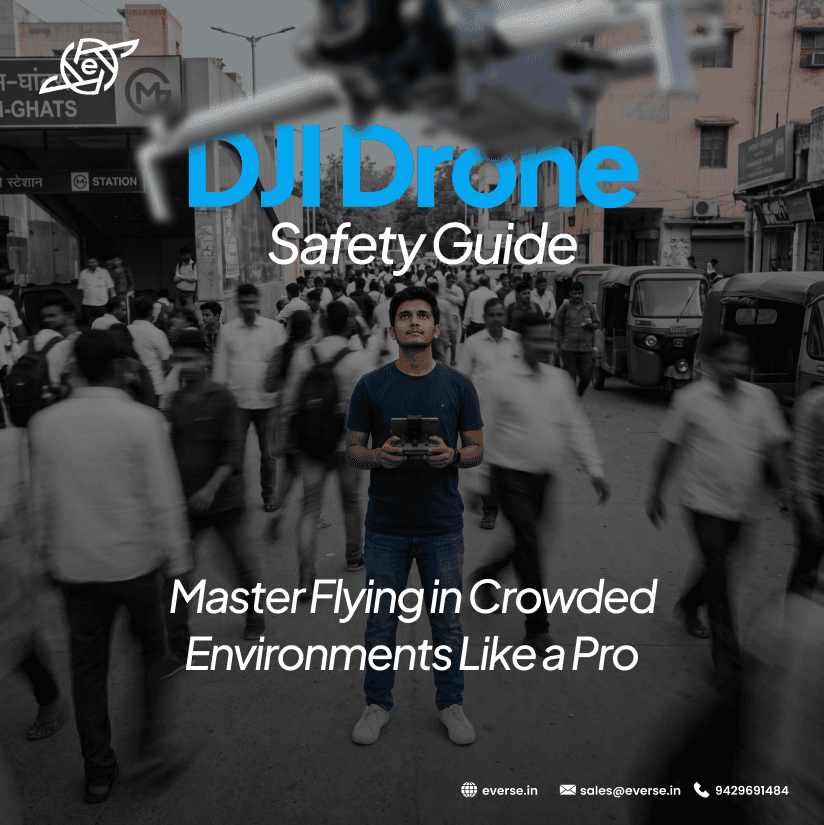
Flying a DJI drone in crowded places is where skill meets responsibility. It is easy to get caught up in capturing cinematic shots of festivals, cityscapes, or public gatherings, but operating in such environments requires a calculated, safety-first mindset. We are not just flying a device—we are managing airspace, people, and unpredictable conditions all at once.
Crowded environments amplify every small mistake. A minor control delay, a sudden gust of wind, or a brief distraction can quickly escalate into a dangerous situation. That is why we must treat every flight in a populated area as a high-risk operation that demands precision, awareness, and preparation.
At everse.in, we emphasize mastering both the technical and human aspects of drone flying. It is not just about knowing your drone—it is about reading the environment, anticipating risks, and making decisions in real time. When done correctly, flying in crowded places can be both safe and incredibly rewarding.
Flying in crowded locations introduces a level of complexity that many pilots underestimate. Unlike open fields, these environments are dynamic, dense, and often unpredictable. The risks are not theoretical—they are immediate and constantly evolving.
One major risk is signal interference. Urban areas and events are saturated with wireless signals, from smartphones to Wi-Fi networks. These signals can interfere with your drone’s communication system, leading to lag or temporary disconnection. Even a split-second delay can cause the drone to drift or misinterpret commands.
Another critical factor is limited maneuvering space. In crowded places, there is little room for error. Buildings, trees, poles, and people all create a tight operating environment. This means we must fly slower, plan movements carefully, and avoid sudden directional changes.
Human unpredictability adds another layer of risk. People move randomly, gather in groups, and may react unexpectedly to a drone overhead. This makes it essential to maintain a safe buffer zone at all times.
Key Risk Factors to Always Monitor:
-
High signal interference zones
-
Sudden crowd movement
-
Wind turbulence between structures
-
Reduced GPS accuracy
Understanding these risks is the first step toward safe drone operation. Awareness is not optional—it is the foundation of every successful flight.
Flying a DJI drone over crowds is heavily regulated in most countries, and ignoring these rules can lead to serious consequences. Regulations exist to protect people, property, and airspace, and compliance is non-negotiable.
In many regions, flying directly over people is either restricted or requires special permissions. Authorities often mandate maintaining a minimum horizontal distance from individuals and prohibit flying over large gatherings such as concerts or protests.
Drone pilots are also required to:
-
Register their drones
-
Obtain necessary certifications or licenses
-
Follow altitude limits (commonly 120 meters)
-
Avoid restricted zones like airports and military areas
Privacy laws are equally important. Capturing images or videos of individuals without consent can lead to legal disputes, especially if the footage is published.
Failure to comply can result in:
-
Heavy fines
-
Drone confiscation
-
Legal liability for damages
We strongly recommend checking local aviation authority guidelines before every flight. Regulations can change, and staying updated ensures both safety and legality.
DJI drones come equipped with advanced safety technologies, but these features are only effective when used correctly. Understanding how to configure and rely on them appropriately can significantly reduce risks.
-
Obstacle Avoidance: Detects and avoids objects in real time
-
Return-to-Home (RTH): Automatically brings the drone back safely
-
Geo-Fencing: Prevents entry into restricted areas
-
Vision Positioning System: Enhances stability in low GPS conditions
Obstacle avoidance is especially useful in crowded environments, but it has limitations. It may fail to detect thin wires or transparent objects. This means we must still maintain manual vigilance.
Return-to-Home should always be configured with a safe altitude, ensuring the drone avoids obstacles during its return path. Geo-fencing helps prevent accidental entry into restricted zones, but it can also interrupt flights if not planned properly.
Mastering these features transforms your drone into a smart, responsive tool rather than a risky gadget.
Every safe flight begins long before takeoff. Pre-flight planning is what separates professional pilots from careless ones. In crowded areas, preparation is everything.
Start with a site inspection. Walk through the location and identify potential hazards such as power lines, tall structures, and dense crowd zones. Understanding the layout helps you plan safer flight paths.
Next, evaluate environmental conditions:
-
Check wind speed and direction
-
Assess lighting conditions
-
Identify potential signal interference sources
Battery management is critical. Always start with a fully charged battery and plan for a safe landing before it drops below critical levels. Crowded areas do not offer easy emergency landing options.
We also recommend setting:
-
Maximum altitude limits
-
Return-to-Home point
-
Safe flight boundaries
Pre-flight planning is not just a checklist—it is a strategic process that ensures control and safety throughout the flight.
Flying in crowded places requires a completely different approach compared to open areas. Precision and patience become your most valuable skills.
The first rule is to fly slow and steady. Rapid movements increase the risk of collisions and reduce reaction time. Smooth, controlled inputs allow you to maintain stability and awareness.
Always maintain visual line of sight (VLOS). Relying solely on the screen can disconnect you from real-world conditions. Keeping your eyes on the drone ensures you can react instantly to unexpected obstacles.
Use Tripod Mode or Cinematic Mode to reduce speed and improve control sensitivity. These modes are specifically designed for precise movements, making them ideal for crowded environments.
Avoid flying directly above people. Instead, maintain a safe lateral distance and capture angles that minimize risk.
Safe flying is not about showing off—it is about maintaining control under pressure.
Understanding crowd behavior is just as important as understanding your drone. People are unpredictable, and their movements can change instantly.
Watch for:
-
Sudden gatherings or dispersals
-
Individuals pointing or reacting to the drone
-
Changes in crowd density
Always have an emergency landing plan. Identify safe zones where you can land quickly if something goes wrong. This could be an open patch, rooftop, or designated safe area.
In case of signal loss or malfunction:
-
Stay calm and assess the situation
-
Activate Return-to-Home if safe
-
Manually guide the drone to a clear landing zone
Preparation and awareness ensure that even unexpected situations are handled smoothly.
.png)
Even experienced pilots make mistakes, especially in high-pressure environments. Recognizing these errors can help you avoid them.
Top Mistakes to Avoid
-
Flying too fast in tight spaces
-
Ignoring low battery warnings
-
Relying entirely on obstacle avoidance
-
Losing visual line of sight
-
Flying directly over people
Overconfidence is one of the biggest risks. Just because a drone has advanced features does not mean it can handle every situation automatically.
Safe flying requires humility, discipline, and constant awareness.
No one should attempt to fly in crowded areas without proper practice. Skills must be developed in controlled environments before being applied in complex settings.
Start in open spaces where you can:
-
Practice precision control
-
Learn how the drone responds to inputs
-
Understand wind behavior
Use simulators and training modes to improve your skills without risk. Repetition builds muscle memory, allowing you to react instinctively during real flights.
Practice transforms hesitation into confidence and reduces the chances of costly mistakes.
Flying DJI drones in crowded places is not about pushing limits—it is about mastering control. Safety must always come before creativity. The best shots are the ones captured without compromising the well-being of others.
We encourage you to continue learning, practicing, and refining your skills. For more in-depth guides, tutorials, and expert insights, visit everse.in and elevate your drone flying experience to the next level.