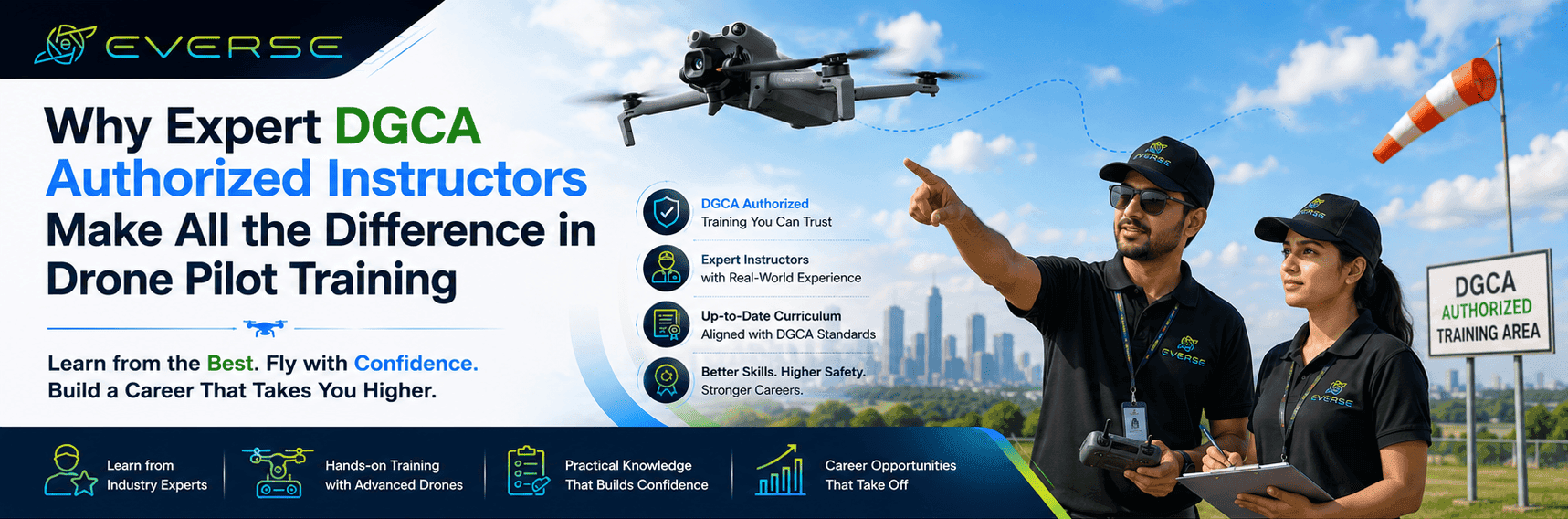
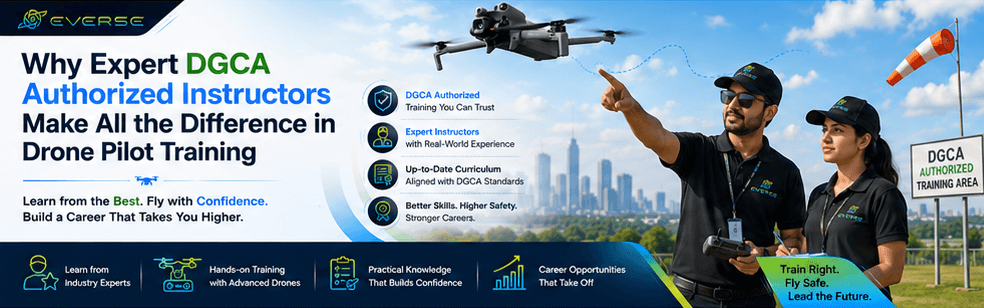
Why Expert DGCA Authorized Instructors Make All the Difference in Drone Pilot Training
When people evaluate a drone pilot training program, they often focus on the certification, the drones being used, or the duration of the course.
While all of these factors are important, there is one element that has an even greater impact on the learning experience:
The instructor.
A drone pilot's journey is shaped not only by the technology they learn to operate but also by the expertise of the professionals guiding them through the process. The best training programs don't simply provide drones and study material—they provide access to experienced instructors who can transform complex concepts into practical skills.
This is why the quality of instructors remains one of the most important factors when choosing a DGCA Approved Drone Pilot Training Program.
At Everse, trainees learn from DGCA Authorized Instructors who bring professional knowledge, practical experience, and a deep understanding of drone operations into every stage of training.
Many first-time trainees assume drone training is primarily about learning how to fly.
In reality, professional drone operations involve much more than controlling an aircraft.
A competent drone pilot must understand:
- Aviation regulations
- Airspace awareness
- Safety management
- Flight planning
- Risk assessment
- Equipment handling
- Mission execution
- Emergency procedures
For someone entering the industry for the first time, these topics can feel overwhelming.
Experienced instructors play a critical role in making this knowledge understandable, practical, and relevant to real-world operations.
There is a significant difference between learning from someone who has studied drone operations and learning from someone who has actively conducted them.
Experienced instructors bring practical insights that cannot always be found in textbooks.
They can explain:
- Common mistakes made by new pilots
- Real-world operational challenges
- Best practices for safe flying
- How to handle unexpected situations
- Industry expectations for professional pilots
These insights help trainees develop the judgment and decision-making skills that employers value.
Learning from experience often accelerates learning far more effectively than theory alone.
One of the biggest hurdles for new drone pilots is confidence.
The first few flights can be intimidating.
Questions often run through a trainee's mind:
- What if I lose orientation?
- What if I make a mistake during landing?
- What if the weather changes unexpectedly?
- What should I do if something goes wrong?
An experienced instructor provides more than technical instruction.
They provide reassurance, guidance, and structured feedback that helps trainees improve with every flight.
Over time, nervous beginners develop the confidence needed to operate drones safely and independently.
Professional drone operations require more than simply keeping an aircraft in the air.
Successful pilots follow structured procedures before, during, and after every mission.
Expert instructors help trainees understand professional standards such as:
Before every flight, pilots must assess weather conditions, inspect equipment, evaluate risks, and ensure operational readiness.
Professional flying requires consistency and attention to detail.
Instructors teach pilots how to follow established procedures that improve both safety and efficiency.
One of the most valuable lessons any pilot can learn is knowing when not to fly.
Experienced instructors help trainees understand how to assess risks and prioritize safety under all circumstances.
These habits often become the foundation of a pilot's professional career.
The drone industry is dynamic.
Every mission is different.
Surveying a mining site presents different challenges than inspecting a solar plant. Agricultural operations differ from construction monitoring. Infrastructure inspections require different planning than aerial photography.
Experienced instructors expose trainees to practical scenarios that help them understand how drone operations vary across industries.
This broader perspective helps pilots become more adaptable and career-ready.
As drone adoption increases across sectors, employers are becoming more selective about the pilots they hire.
Organizations want professionals who can:
- Operate safely
- Follow regulations
- Manage missions effectively
- Communicate professionally
- Handle real-world challenges confidently
Pilots trained by experienced instructors often enter the workforce with stronger operational skills and a deeper understanding of professional expectations.
This can provide a significant advantage when pursuing career opportunities in the drone industry.
Our 5-Day DGCA Approved Drone Pilot Training Program is designed to provide participants with direct access to knowledgeable instructors who understand both the technical and practical aspects of drone operations.
Throughout the program, trainees receive guidance on:
- Drone regulations and compliance
- Flight planning and mission preparation
- Simulator training
- Practical flight operations
- Safety procedures
- Industry best practices
More importantly, participants benefit from mentorship that helps bridge the gap between classroom learning and real-world application.
Every skilled pilot can point to someone who helped shape their journey.
Technology continues to evolve. Drone capabilities continue to expand. New opportunities emerge every year.
Yet one factor remains constant.
The quality of instruction plays a critical role in determining how quickly and effectively a trainee develops into a competent professional.
A DGCA Approved Drone Pilot Training Program provides the certification needed to enter the industry. Expert instructors provide the knowledge, experience, and confidence needed to succeed in it.
At Everse, we are committed to delivering both.
Because becoming a professional drone pilot isn't simply about earning a certificate—it's about learning from the people who know what it takes to fly with skill, responsibility, and confidence.