Best Drone for Emergency Response & Search & Rescue
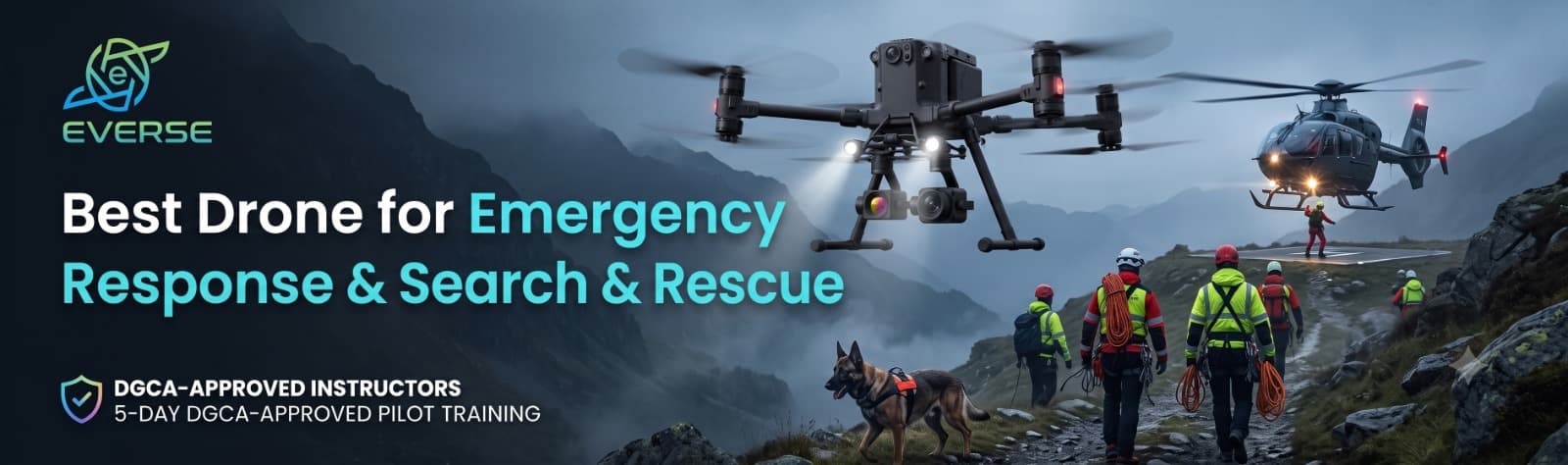
When emergencies occur, every minute can make a difference. Whether it's locating a missing person, assessing the damage caused by a natural disaster, or supporting rescue teams in difficult terrain, having accurate information as quickly as possible is critical. This is where drone technology has become an essential asset for modern emergency response and search & rescue (SAR) operations.
Drones provide responders with a real-time aerial view of the situation, allowing them to cover large areas faster than traditional ground searches. They can access locations that may be dangerous or inaccessible for rescue teams, helping improve situational awareness while reducing risks to personnel.
Today, drones are being used by emergency services, disaster management teams, law enforcement agencies, firefighters, and humanitarian organizations around the world to enhance response capabilities and save lives.
Traditional search operations often require significant manpower, vehicles, and time. In challenging environments such as forests, mountains, flooded regions, or collapsed buildings, searching manually can be slow and dangerous.
Drones offer a faster and more efficient approach by providing high-resolution aerial imagery and live video feeds. Rescue teams can quickly identify obstacles, monitor changing conditions, and locate people in need of assistance without exposing additional personnel to unnecessary risks.
Their ability to collect accurate visual data in real time makes them an invaluable tool during time-sensitive missions.
Emergency response drones are used across a wide range of scenarios, including:
- Search and rescue operations for missing persons
- Flood and cyclone damage assessment
- Wildfire monitoring
- Earthquake and landslide response
- Coastal and water rescue
- Forest and mountain rescue missions
- Infrastructure assessment after disasters
- Public safety and emergency planning
These applications help emergency teams make informed decisions and coordinate resources more effectively.
Choosing the right drone depends on the operational requirements. Some of the most important features include:
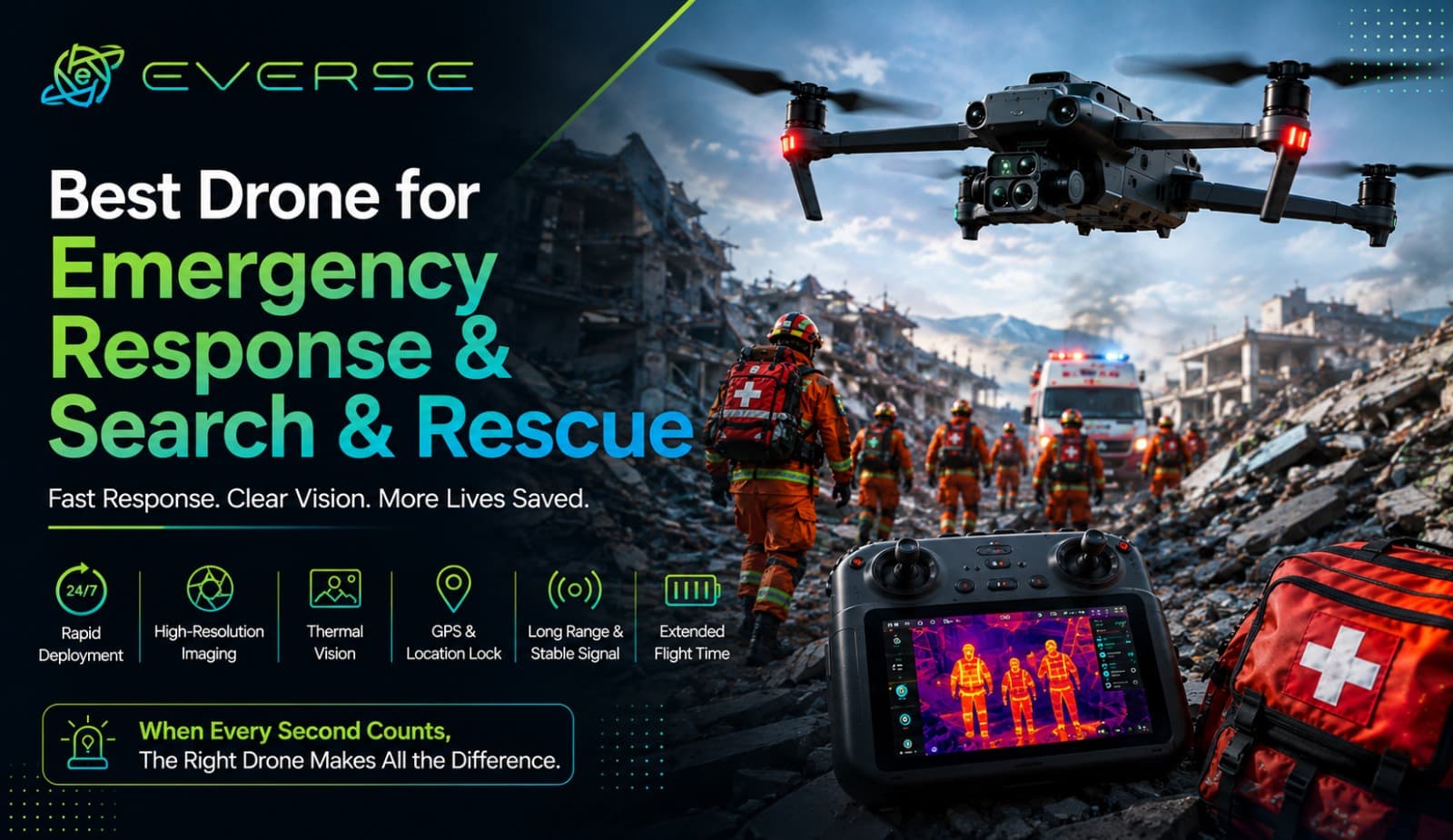
A high-quality camera allows rescue teams to capture detailed aerial images and videos, making it easier to identify people, damaged structures, blocked roads, or hazardous areas.
Thermal cameras are particularly valuable during low-light conditions or when searching for people hidden by vegetation, smoke, or debris. By detecting heat signatures, thermal imaging can significantly improve the chances of locating survivors.
Search operations often cover large areas, making battery endurance an important factor. Longer flight times reduce interruptions and allow teams to monitor larger regions during a single mission.
Optical zoom cameras enable operators to inspect distant areas without flying dangerously close to obstacles or unstable structures.
Emergency environments are often unpredictable. Advanced obstacle sensing systems help drones navigate around trees, buildings, utility poles, and other hazards, improving operational safety.
A stable, long-range video transmission system ensures rescue teams receive clear live footage, even when operating over large areas.
Different missions require different types of drones.
Compact professional drones are well suited for rapid deployment, visual inspections, and urban emergency response due to their portability and ease of operation.
For large-scale search & rescue, disaster management, and public safety operations, enterprise drones equipped with thermal cameras, powerful zoom systems, extended flight times, and advanced mapping capabilities provide greater flexibility and performance.
Selecting the right platform should depend on the mission objectives, operating environment, and data requirements.
Even the most advanced drone is only as effective as the person operating it.
Emergency response pilots must understand aviation regulations, flight planning, weather assessment, risk management, and emergency procedures. Proper training ensures drones are deployed safely while collecting accurate information that supports rescue teams on the ground.
Organizations investing in drone technology should also prioritize pilot training and regular operational practice to maximize the effectiveness of their aerial operations.
As drone technology continues to evolve, its role in emergency response will become even more significant. Artificial Intelligence, automated flight planning, real-time mapping, and advanced thermal imaging are making drones smarter, faster, and more capable of supporting rescue missions.
Future systems will help emergency teams assess disaster zones more quickly, improve coordination, and respond to incidents with greater efficiency than ever before.
Drones have transformed the way emergency teams respond to critical situations. By providing rapid aerial intelligence, improving situational awareness, and reducing operational risks, they have become an indispensable tool for modern search & rescue operations.
At Everse, we offer advanced DJI drone solutions suitable for public safety, disaster response, and professional aerial operations. Whether you're part of an emergency response organization or looking to deploy drones for critical missions, selecting the right platform can significantly improve operational efficiency and help teams respond with confidence when every second matters.